Ponte dell’Accademia
Among the four bridges that span the Grand Canal, the Ponte dell’Accademia holds a special place in the cultural and visual identity of Venice. Situated between the artistic district of Dorsoduro Venezia and the historic heart of San Marco Venice, it stands as the most beloved wooden bridge in the city. Celebrated for its sweeping panoramic views, atmospheric sunsets, and closeness to some of Venice’s greatest landmarks, it has become one of the most photographed spots in the entire Venetian Lagoon.
More than a simple river crossing, the Ponte dell’Accademia represents a fusion of tradition, engineering adaptation, and Venetian character.
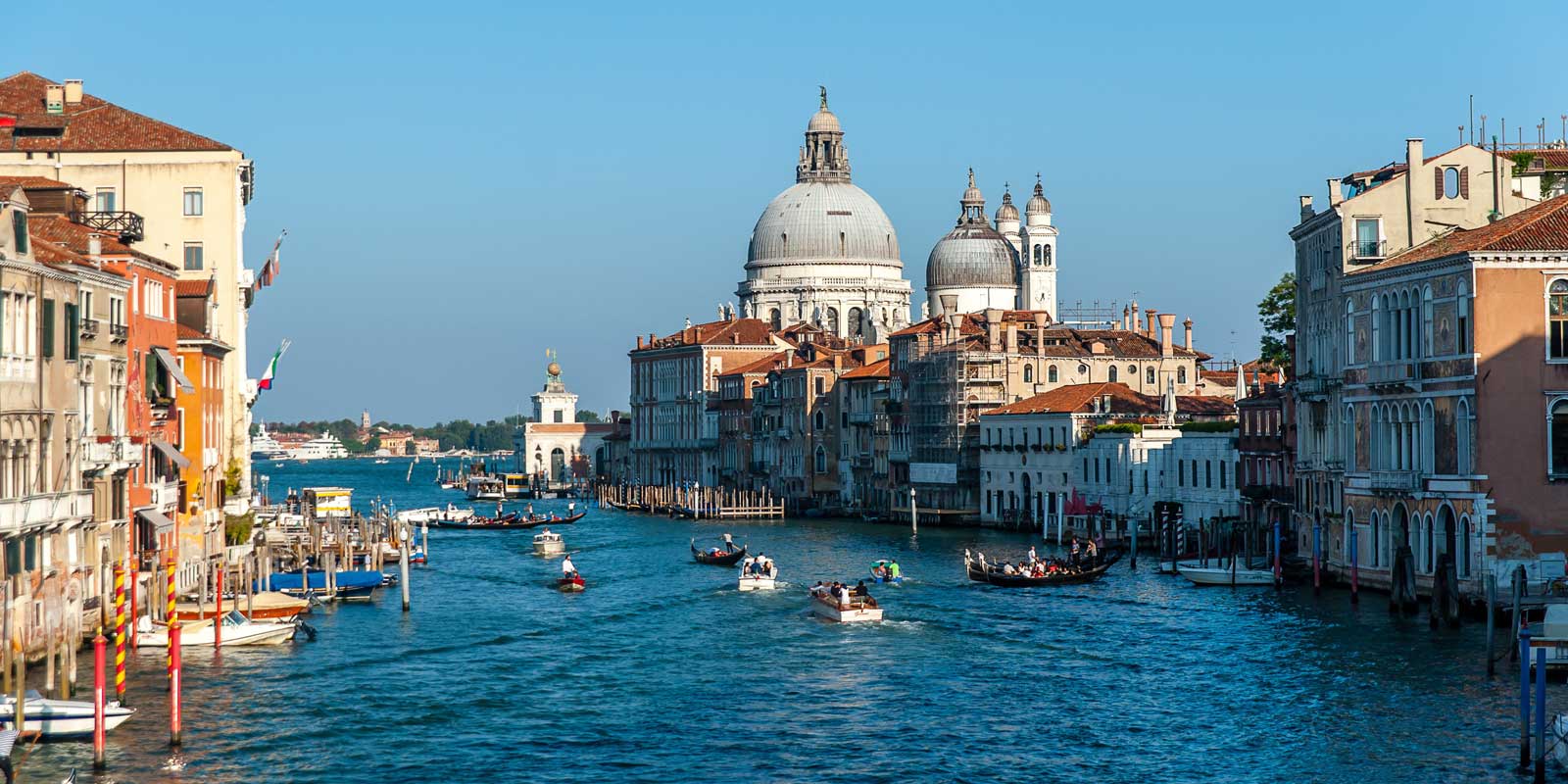
As visitors ascend its wooden steps, they are greeted by one of the most iconic vistas in Italy—an open corridor of shimmering water lined with palaces, gondolas, and the unmistakable silhouette of Basilica di Santa Maria Della Salute rising at the mouth of the canal.
This bridge is not merely a passage; it is a scenic viewpoint, a meeting place, a romantic landmark, and a reminder of Venice’s architectural evolution.
Unmissable Venice Tours
What is Ponte dell'Accademia?
The Ponte dell’Accademia is a wooden arch bridge reinforced with steel, designed to safely carry thousands of pedestrians daily across the Grand Canal. Its simple yet elegant shape reflects Venice’s ongoing balance between tradition and innovation.
Although built from humble materials, its structure harmonizes beautifully with the surrounding scenery, particularly the stately façade of the Accademia Gallery and the gentle curvature of palaces lining the canal.
Functionally, the bridge is one of the most important pedestrian connections between Dorsoduro Venezia and San Marco Venice, facilitating access to numerous museums, churches, cafés, and cultural institutions. Among its immediate surroundings are the Campo della Carità, the entrance to the Accademia Gallery, and picturesque canals feeding into the wider lagoon.
Yet its greatest fame comes not from its utility but from the extraordinary viewpoint it offers—one of the clearest, widest, and most atmospheric perspectives on the Grand Canal, admired by photographers, painters, and travellers from across the world.
Background Information
The First Iron Bridge (1854)
The story of the Ponte dell’Accademia began in 1854 when English engineer Alfred Neville constructed an iron structure to meet the rising mobility needs of Venice.
With the Ponte di Rialto already serving the commercial centre of San Polo Venice, and the distant Ponte degli Scalzi eventually serving the area near Santa Lucia Station, another major canal crossing was essential.
The 1854 iron bridge fulfilled this requirement, enabling smoother movement between artistic and governmental centres.
The Provisional Wooden Bridge (1933)
By the early 20th century, the iron bridge had deteriorated, prompting the city to replace it with what was intended to be a temporary wooden structure in 1933. Surprisingly, this wooden bridge quickly gained public affection.
Venetians appreciated its warmth and harmony with historical surroundings, especially its compatibility with views toward Basilica di Santa Maria Della Salute and Punta della Dogana.
Its acceptance was so strong that it was never replaced with the planned permanent version, and the wooden bridge remained.
Debates Over Material & Structure
Over the decades, proposals surfaced to construct a stone or metal replacement, aligning it with monumental architecture such as Doge’s Palace, St Mark’s Basilica, and iconic structures around St Mark’s Square.
However, public sentiment consistently favoured preserving the wooden bridge. The bridge’s rustic texture blended seamlessly with the artistic ambience of Dorsoduro Venezia and the scholarly environment of the Accademia Gallery, helping maintain Venice’s aesthetic continuity.
Renovations & Modern Reinforcements
A series of restorations strengthened the bridge for modern use. Steel reinforcements were introduced beneath the visible wooden beams to support daily foot traffic. These renovations ensured the structure remained safe while preserving its classic appearance.
This effort mirrors similar preservation projects across Venice, from the restoration of masterpieces in the Correr Museum to conservation works in Scuola Grande di San Rocco and monumental spaces such as San Giorgio Maggiore.
Architectural Features
Design Elements
The Ponte dell’Accademia is designed as a high arch, allowing space beneath for gondolas, vaporetti, and water taxis to pass. Its geometry ensures both stability and beauty, echoing the graceful functionalism found in Venetian boatbuilding traditions, including those displayed in exhibits at the Naval History Museum.
The ascending steps provide a comfortable climb while guiding visitors to a central viewpoint. Unlike the fully stone-built Ponte di Rialto, the wooden and steel combination of the Accademia Bridge gives it a lighter, more contemporary silhouette.
Construction Materials
The bridge is primarily constructed from timber, chosen for its visual warmth and historical resonance. Wood’s organic qualities complement the colourful facades of nearby palazzi and the surrounding artistic neighbourhood.
Steel elements are discreetly hidden below the deck, providing essential reinforcement without undermining the traditional appearance—a balanced approach also seen in restoration efforts at places like Ca’ d’Oro and Ca' Rezzonico.
Accessibility
While the bridge is wide and navigable, its stepped design poses challenges for wheelchair users, strollers, or travellers carrying heavy luggage. Though less accessible than routes near Piazzale Roma or the flatter paths around Venice Mestre, it remains manageable for most visitors and offers handrails along both sides for safety.
Why Ponte dell'Accademia is so famous
Scenic Views along the Grand Canal
The bridge offers one of the best perspectives along the Grand Canal, looking directly toward Basilica di Santa Maria Della Salute with Punta della Dogana to its right.
From this vantage point, gondolas glide beneath the arch, water taxis trace ripples across the canal, and historic palaces mirror themselves on the surface.
The openness of the panorama allows visitors to appreciate the canal’s breadth far more clearly than from the Bridge of Sighs, whose enclosed architecture restricts views.
Artistic & Cultural Significance
Situated beside the Accademia Gallery, the bridge lies at the heart of Venice’s artistic axis. This proximity draws students, painters, photographers, and art lovers who frequently use the bridge as a base for sketching or study.
Like the creative energy found in the Peggy Guggenheim Collection, the Accademia area buzzes with cultural life, making the bridge a symbolic passage between Venice’s artistic heritage and its everyday rhythm.
Romantic Symbolism
The wooden arch, warm evening lighting, and gentle breeze from the canal have made Ponte dell’Accademia a beloved spot for couples.
Many compare its romantic charm to the storied atmosphere surrounding Rialto Bridge, though the Accademia version offers a quieter, more intimate experience.
Engagements, anniversaries, and sunset strolls are common, adding to the bridge’s emotional significance.
Environment: What to See around the Bridge
Gallerie dell'Accademia
Only steps from the bridge stands the Accademia Gallery, one of the most important art museums in Venice. Home to masterpieces by Bellini, Tintoretto, Titian, Veronese, and Canaletto, it is a destination that attracts art scholars and enthusiasts worldwide.
Dorsoduro District
The surrounding Dorsoduro Venezia district is known for its serene atmosphere, artisan workshops, charming cafés, and tasteful boutiques. Streets leading toward Santa Maria dei Carmini, Madonna dell’Orto Church, and San Pantalon offer glimpses into authentic Venetian daily life, away from the busier zones of San Marco Venice.
Lovely Walks Along the Grand Canal
The walk from Ponte dell’Accademia to Basilica di Santa Maria Della Salute is among the most scenic in the city. Visitors can enjoy peaceful waterfront promenades, quiet squares such as those near Zattere, and views reaching across the lagoon toward Giudecca and San Giorgio Maggiore.
Vaporetto Stops
The nearest vaporetto stop, “Accademia,” lies at the base of the bridge. It connects visitors to Murano and its glassworks, Burano Island Venice, Torcello, Venice Lido, and other important routes, making the bridge an ideal starting point for many itineraries.
Best Venice Entry Tickets
Visitor Experience & Practical Tips
Best Time to Visit
For photographers, sunrise offers soft light, peaceful canals, and fewer crowds. Sunset, however, creates dramatic golden reflections across the Grand Canal, especially toward Basilica di Santa Maria Della Salute. Midday visits tend to be busiest, particularly during events such as the Venice Carnival, Regata Storica, Vogalonga, or the Venice Marathon.
Photography Tips
From the middle of the bridge, one gets shots of the iconic scenes: gondolas, domes of the churches, and boats cutting across.
A slight angling toward the Punta della Dogana gives a very striking composition. A lower vantage point at the bottom of the bridge allows for shots of framing in the wooden structure.
Crowds & Safety
During peak season, the number of people who cross the bridge is considerable. It is always advisable for tourists to take great care regarding their belongings, as in any crowded place, especially when taking pictures, the crowd is never predictable. That is why morning and late evening is the best time for a more quiet experience.
The Bridge in Modern Culture
Travel Reviews & Tourist Impressions
Indeed, reviews of Ponte dell'Accademia would repeatedly claim it as one of the best free viewpoints in Venice, quite often rivaling more expensive attractions.
Many also mention its generally romantic atmosphere, proximity to major museums, and sweeping views down the Grand Canal.
The centrality likewise makes this a natural meeting point for walking tours that take in Venice Walking Tours, Venice Art Tours, or photo-led excursions.
Film, Book & Media Appearances
The bridge is very frequent in movie representations of Venice; it is part and parcel of the city's visual identity in world media. While perhaps not as immediately iconic as Ponte di Rialto or the Bridge of Sighs, its wooden arch and open vista render it a favorite with directors looking for atmospheric shots.
Preservation & Future Plans
Structural Maintenance
Being of wood, and at the mercy of damp, the Ponte dell'Accademia needs periodic repair and checking.
The heritage authorities in Venice regularly assess the soundness of its beams and their steel underpinning for long-term stability. Preservation work also goes on around town at Museo Fortuny, Palazzo Grimani, and waterfront buildings at Zattere.
Replacement Discussions
Sometimes, debates take place on replacing it with a stronger stone or metallic one. However, the Venetians prefer to keep it in its wooden form, believing this adds to the essence of their city.
The warm tones of the bridge are easier on any nearby museums, churches, and other cultural facilities compared to any metal alternative replacement.
Visitor and Ticket Information
Visitor Information
Operating Hours: The Ponte dell’Accademia is a public pedestrian bridge and thus open 24 hours a day, 7 days a week — there are no official opening/closing hours.
As a result, visitors may cross it at any time; many prefer early morning or late evening for a quieter atmosphere and especially to catch sunrise or sunset light over the Grand Canal.
Best Time to Visit Sunrise: Offers soft light, calm water, and fewer people — ideal for photography and quiet contemplation.
Sunset & early evening: Many visitors praise the warm glow on the canal’s water and the silhouette of the domes and palaces, creating what many consider the most atmospheric views in Venice.
Off-peak seasons (fall, winter, early spring) tend to offer fewer crowds, more serenity, and a more local feel.
Dress Code & Entry: Policy As an open public bridge, there is no formal dress code or entry screening required. No tickets or reservations are needed to cross. Visitors should be mindful of personal belongings, especially during peak hours, since the bridge is a well-trafficked walkway with many pedestrians and tourists.
Several travel reviews highlight modest crowds at busy times. Because the bridge is made of wood with steps, those with limited mobility or carrying heavy luggage should plan accordingly — though many guides suggest using water-bus (vaporetto) alternatives if necessary.
Ticket Information
The crossing of Ponte dell'Accademia is free, no entry fee, or ticket was required. As such, visitors do not need to book in advance or pay for access. The bridge is maintained as a public thoroughfare.
However, nearby cultural attractions — such as the Gallerie dell’Accademia — do require tickets and separate planning for those who wish to combine a museum visit with the bridge crossing.
Online Booking: Since the bridge itself is free and open access, there is no online booking needed for crossing it. For nearby attractions — especially the Gallerie dell’Accademia — booking online is strongly advised, especially during high season, to avoid long queues or sold-out slots.
Guided Tours: Many walking tours and guided excursions of Venice include the Ponte dell’Accademia as a highlight, often combining it with visits to art galleries, historic districts, and scenic viewpoints.
Some tours also offer a boat-based perspective — for example, gondola rides or water-taxi journeys along the Grand Canal so visitors can view the bridge from the water, offering a different vantage point and often a more serene atmosphere.
Guided tours can provide additional context (history, architecture, photography tips), which may enhance the visitor’s experience, especially for first-time travellers to Venice.
Our Recommended "Tickets" for a Visit
Interpreti Veneziani Concert & Visit To The Music Museum
Exclusive Access Tour: Doge's Palace & St. Mark's Basilica Terrace
Half-Day Guided Tour to Murano, Burano & Torcello Islands
How to Visit Ponte dell'Accademia
Exact Position
That bridge links San Marco, Venice with Dorsoduro Venezia, being set pretty close to the Accademia Gallery and Campo della Carità. Centrally located, it can easily be made part of any itinerary, like the one covering San Marco and Castello or the walking routes around San Polo-Dorsoduro.
How to Get There
Visitors arriving from St Mark’s Square can reach the bridge within a 10-minute walk, passing landmarks such as La Fenice Theatre. From the Ponte di Rialto, this would take approximately 20 minutes through the picturesque districts of San Polo Venice. Vaporetto travelers have to make use of the “Accademia” stop, from where the bridge is immediately visible.
Accessibility Notes
With its stepped design, it is less wheelchair-accessible or suitable for heavy strollers. The less mobile might favor using vaporetto transport between districts or crossing via the flatter Ponte degli Scalzi near Santa Lucia Station.
All Affordable Tours in Venice
Conclusion
The Ponte dell’Accademia embodies the rhythms, beauty, and character of Venice, offering unmatched views of the Grand Canal and access to some of the city’s most meaningful cultural districts. Whether admired at sunrise, sunset, or under the soft glow of Venice’s evening lights, it remains one of the city’s most atmospheric and accessible landmarks.
By standing upon this wooden arch—glancing toward Basilica di Santa Maria Della Salute, observing gondolas drifting along the canal, or simply absorbing the tranquillity of Dorsoduro Venezia—visitors gain a fuller appreciation of the layered beauty that defines the Venetian Lagoon.
A visit to Ponte dell’Accademia is not only a crossing but an experience—one that reflects Venice’s artistic legacy, architectural evolution, and timeless ability to inspire.