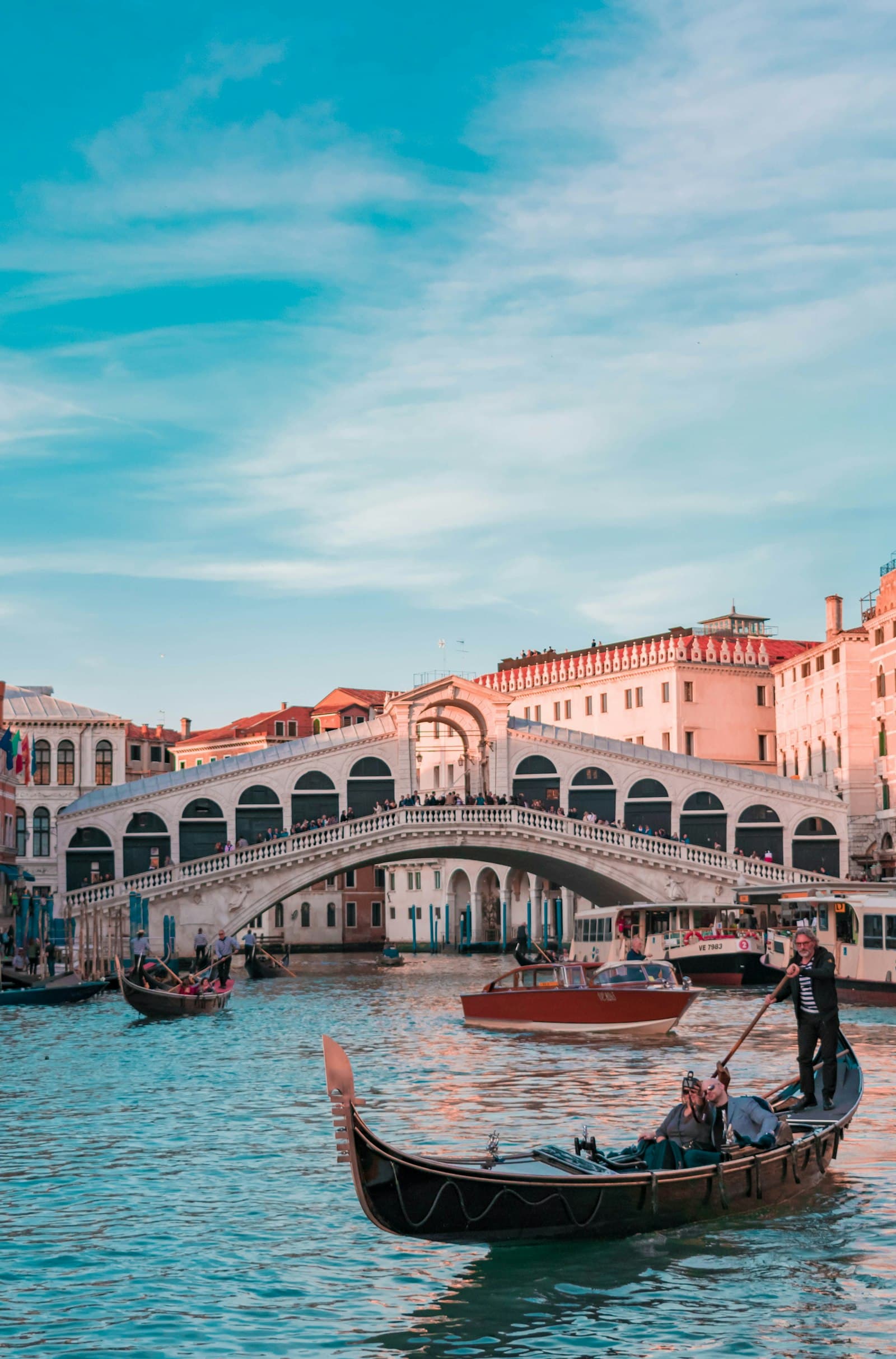
Hydrofoil
Discover how hydrofoils revolutionize travel across the Venetian Lagoon—gliding above water for speed, efficiency, and a modern twist on tradition.
Venice, a city constructed by its watery canal complex and nautical past, remains largely dependent upon water travel. Daily morning commutes to tourism enterprises, the city's life flows through its lagoons.
Vaporettos, gondolas, and ferries have dominated the waterways for centuries, yet a challenger is on the horizon ready to shake things up: the hydrofoil boat.
With more emphasis on efficiency and sustainability, hydrofoils offer Venice an attractive alternative—a mixture of the speeds of new technology with an environmentally friendly design.
The ships rise out of the waterline, minimizing drag and wake, and connecting Venice to the coastal settlements along the Adriatic at the same time. While the lagoon city is trying to find a good balance between conservation and development, hydrofoils are an appreciation for innovation in lagoon transport.
Unmissable Venice Boat Tours
What Are Hydrofoil Boats?
Hydrofoil boats are boats featuring wing-like foils attached underneath the hull. When moving, these underwater foils elevate the ship's body above the water, cutting surface drag and enabling increased speed. It's the same principle as an airplane wing producing lift—except in this case, it's water pressure lifting the ship.
In contrast to older ferries or vaporettos that slash across the water and create bigger wakes, hydrofoils skim close to friction-free, with a smoother ride and less damage to shorelines.
Hydrofoils are more fuel-efficient because they ride higher over the water and thus experience less resistance. Because of this, they are more suitable for environmentally sensitive locales like the Venetian Lagoon.
Speed, energy efficiency, and comfort define hydrofoils—making them an economical alternative or complement to existing modes of transport in Venice and elsewhere.
History and Evolution of Hydrofoils in Venice
Hydrofoils are far from new, though, in Venice. They first emerged in the mid-20th century when routes across the Adriatic started to open. They acted as express connections between Italy and ex-Yugoslav nations.
Infrastructure limitations and the growing need for slow, large ferries later displaced hydrofoils. The reduced focus on speed and greater maintenance expense contributed to hastening their decline in popularity.
Nowadays, the tale has shifted. Increased awareness of global warming, technology, and more economical hull design have made hydrofoils popular once again. Modern ships, like the electric Candela P-12, provide not only speed but also almost zero emissions—therefore the hydrofoil is the transportation of the future for Venice.
Key Routes and Operators
Venice's recent re-emergence of hydrofoil connections is in considerable measure the work of adult regional ferry companies, especially Adriatic Lines, whose principal Venice to several major Croatian ports—Rovinj, Pula, and Poreč—routes have driven cross-Adriatic holiday-making.
The speed ferries offer not only speed, but a neat, clean, and comfortable choice for longer sea crossings. Traveling primarily in spring and summer months, they are particularly loved by tourists looking to enjoy a brief and scenic sea trip.
The boats themselves are fitted with reclining seats, air conditioning, and large windows, prolonging the travel experience as much as the destination.
Aside from the operators themselves, overseas sites such as Direct Ferries have helped to make it more accessible. Such websites provide current timetables with comparison, multilingual front-ends, and safe online booking, allowing passengers to easily customize their journey.
This synergy of logistics and technology has significantly improved accessibility for overseas visitors as well as local commuters.
Aside from international travel, local hydrofoil expansion within the lagoon is becoming popular. Suggestions have been made in support of local links that would run between Venice and Lido, Chioggia, and Burano—traditionally disadvantaged by quick transport. Implemented, these paths would not only relieve pressure from current use of slower waterbuses but also tend to de-congest Venice's densely populated historic center.
These enhancements would be double aims of bringing less intrusive city mobility to Venice's sensitive lagoon environment with fewer emissions and wake.
Benefits of Hydrofoil Travel in Venice
Hydrofoil vessels provide a host of advantages to Venice's increasingly contemporary transport system, resolving environmentally, logistically, and tourism-oriented concerns.
Speed: Traditional ferries across the Adriatic take three to five hours depending on the line and weather. Hydrofoils, employing lift-based hull technology, slash travel time significantly—often making the same journey in less than two hours.
For working commuters and tourists both, this ability to travel at speed maximizes convenience and productivity.
Eco-Friendliness: Hydrofoils, as low-drag vessels with raised hulls, consume much less fuel than traditional ships. This equates to fewer greenhouse emissions and lower wave action—a feature particularly vital in a lagoon city where erosion from wake is a threat to historical foundations, such as those surrounding San Giorgio Maggiore and St Mark's Square.
Venice makes a climate-resilient statement of urban design in adopting hydrofoils.
Comfort for the Passenger: Today's hydrofoil experience is far removed from the ferry ordeal. Ships are equipped with stabilising technology that abolishes the impact of motion sickness even in moderately rough seas.
Large interiors, air conditioning, and spacious viewing decks provide a serene experience, adding to the appeal to discerning passengers.
Tourism Potential: With UNESCO World Heritage status, Venice constantly has to balance popularity and sustainability. Hydrofoils introduce a more environmentally aware segment of visitors with discovery.
They also create greater access to backstreet areas such as the Madonna dell Orto Church or Redentore Church, further decentralizing visitor traffic and bringing outlying islands and neighborhoods into the spotlight.
Challenges and Concerns
Though promising to a significant extent, hydrofoils are not exempt from operation issues and limitations that must be addressed to make them viable for successful long-term integration into Venice's transportation system.
Ticket Fee: Of most importance is the affordability question. Hydrofoil fares are generally higher than standard ferry or vaporetto fare, potentially deterring budget-conscious tourists or family travelers. Deserved as it is through the upscale service and its high speed, greater acceptance can be confronted with subsidies or tiered fare.
Docking Facilities: Venice' old piers and docks were not specifically built with hydrofoil-compatibility in mind. Such incompatibility involves investment in the renovation of facilities, e.g., strengthened moorings and extended pontoons.
Absent renovation, boarding and alighting will be awkward or even dangerous, especially in situations involving high passenger interchange.
Weather Sensitivity: Because aerodynamic and lightweight hydrofoils are, they are more weather-sensitive than conventional ships. Sustained winds or rough seas—a common situation in the Adriatic during shoulder months—are bound to result in delays or cancellation, undercutting travel bookings and reliability during shoulder months.
Integration: Integrating hydrofoil services into the general public transport system of Venice, particularly ACTV waterbus timetabling, is also a challenge. Without integrated timetabling and transfer planning, passengers will have to endure long waiting times or even be left behind at their stops.
A transit app or central timetable website could be necessary to link various modes of transit and facilitate easy travel.
Best Boat Tours to Murano and Burano
Current Experiences and Reviews
Later passenger comments on TripAdvisor locate current popularity of hydrofoil journeys from Venice. The majority of visitors praise the considerable time saved in travel and the new interior décor of the vessel.
Unqualified accolades are showered upon the large cabin windows that provide stunning views, facilitating the enjoyment by passengers of uninterrupted vistas of Venetian and Adriatic coastlines.
In all fairness, tourists will be encouraged to come to the port extremely early, especially if traveling in high season or on trans-frontier cruises to Croatia.
Boarding procedures such as customs checks and ticket validation can be more time-consuming than expected. Coming 90–120 minutes early is usually encouraged to encourage a smooth experience.
One of the top-rated videos on YouTube, a movie taken entirely of a hydrofoil journey from Rovinj to Venice, captures the unseen departure from the lagoon and smooth sailing of the ship across the Adriatic. The video has been complimented on its filmic style, with many viewers appreciating the high-tech look of the ship and noiseless running of its engine. Commentators say that they would pay anything to ride on it themselves, particularly compared to the noisy and old ferry models.
For the best out of the experience, seasoned travelers advise taking the morning rides, which are less crowded and feature smoother seas. Such rides also offer better light for photographers who desire to capture the ride along the Venetian Lagoon and open sea.
Future Outlook and Innovation
The future of hydrofoil technology is deeply linked with Venice's broader vision for green and smart mobility. The most groundbreaking innovation in this field is emanating from Sweden, where a company called Candela has introduced a new generation of electric hydrofoils.
The craft combines zero-emission propulsion with smart navigation systems, a template for the mobility of the future at sea.
Such vessels could replace diesel-driven ships in the next decade, especially as environmental regulations in the European Union tighten. Moreover, electric hydrofoils would complement Venice's proposal to ban massive cruise ships and reduce motorboat traffic through the ancient lagoon.
On the digital front, much innovation is yet to come in transportation software and smart scheduling.
Mobile apps that allow passengers to book hydrofoils in real-time, track carbon saved, and get optimisation route suggestions are already on the road. These solutions hold the promise of even greater user interaction and operational effectiveness.
Institutional support for these reforms is also on the rise. Local and regional governments are joining hands with green groups in the expansion of docking facilities and in subsidizing green operators. Pilot projects are being piloted even in association with academic and private collaborators.
In the long run, Venice' hydrofoil service may be a model for other coastal and lagoon cities seeking environmentally sustainable maritime transport.
Mixing preserving heritage and hi-tech innovations, embodied by hydrofoils, is a path where technology and heritage can harmoniously coexist to the benefit of the environment and the tourist alike.
Exploring the Hydrofoil Boats in Venice
Visitor Information
Opening Hours: Seasonal hydrofoil journeys by hydrofoils between Venice and destinations such as Pula, Rovinj, Poreč, and Umag—presumably during late April to early October. The number of departures per day will vary depending on the route; passengers are requested to consult the operator's schedule in advance as the number of departures might vary between weekdays and weekends.
Best Time to Visit: Visitors in search of best weather and amenities must travel in high season (May–September), when hydrofoil operation is at its peak and sailings are scheduled for the optimum warmest, most tranquil lagoon conditions .
Dress Code & Entry Rules: Maritime dress code is observed on hydrofoil boats. Weather-dependent casuals and sturdy shoes are recommended.
For worldwide flights, traveling passengers need to present a valid passport or national European ID card when boarding a plane. Pets are normally allowed after special carrier conditions, including carrying carriers or canines' muzzles and presenting a pet passport, are met at additional cost.
Ticket Information
Tickets may be bought online or through designated offices and pontoons designated. Buyers can acquire one-way or same-day return prices, normally offered at cheaper prices for round trips.
Fare bands seasonally (low vs. high) and per route, one-way adult fares of around €74–€89, and child discounted fares (around 50% off).
Luggage & Additional Charges
One hold item and one carry hand allowed per customer.
Bicycles carry a supplement (e.g., €10 per journey), and additional luggage is around €5.
Online Booking: The tickets for hydrofoil can be booked online from the website of Adriatic Lines with live prices and schedules. Other websites like Direct Ferries and Ferryhopper also have the facility of itinerary comparison and safe booking.
Visitors are advised to arrive at least 60–180 minutes in advance of departure time for security and check-in —with check-in typically closing 15 minutes prior to departure.
Guided Tours: Several multi-island and guided tours—e.g., Burano, Murano, and lagoon-island tours—are undertaken by licensed tour operators. Tours may be offered in various languages and may include boarding and departure services for Venice terminals.
Recommended Tickets
Unmissable Kayaking Experience Tour in Venice
Tickets to the Murano Glass Museum in Murano, Venice
Exclusive Custom Boat Tour to Murano, Burano & Torcello
Tips for Travellers
For tourists who wish to experience hydrofoil boats in Venice, the following tips ensure hassle-free rides:
Booking: Online ticket bookings can be done through websites such as Direct Ferries or direct on the Adriatic Lines site. Booking on site is possible but not advisable in peak season.
Documentation: Passport for international routes. National ID cards are also acceptable for EU citizens.
Luggage: Typical suitcases can be carried on most hydrofoil service, but there could be restrictions on size and weight. It is advisable to check in advance with the carrier.
Route Planning: For local tourist circuits with scenic routes, the best routes to Lido and Burano are for domestic tourist circuits. For foreign travel, take Rovinj or Poreč as scenic routes into Croatia.
Best Gondola Water Ride Tour
Conclusion
When Venice begins seeking green city travel, hydrofoil ships are a vision of the future of the city—a combination of speed and efficiency and greenness.
Not only will these ships clear roads and reduce emissions, but they also protect the fragile city lagoon ecosystem.
Hydrofoils offer a great lesson in how new technology can be brought into an historic setting without overloading it. Their ability to link important points—St Mark's Basilica, San Giorgio Maggiore, and beyond—without compromising environmental integrity, is a vital contribution to the increasing transport structure of Venice.
With a future increasingly dominated by climate concerns and visitor pressures, hydrofoils are Venice's fast, clean, and modern solution for lagoon travel.