Excursion to the lagoon islands
Plan a full-day excursion to Murano, Burano and Torcello with boat connections, realistic timings, museum prices, closure days and return-to-Venice advice.
Murano, Burano and Torcello in one day
You can visit Murano, Burano and Torcello in one day by ACTV waterbus: start with Murano’s glassmaking, continue to Burano for colourful houses, lace and lunch, then take the short crossing to Torcello’s mosaics. Allow a full day, roughly eight hours including boats, walks and waiting. Choose two islands if you want a long workshop, several museums or a leisurely meal.
This lagoon-islands excursion explores part of the UNESCO-listed Venice and its Lagoon. The islands offer different perspectives on Venetian craft, early settlement and the wetland landscape. The outline below is a planning guide, not a set of booked departures.
| Stage | Time to allow ashore | Main priority |
|---|---|---|
| Morning: Murano | 2–3 hours | A glass demonstration, canal walk and, if time permits, the Glass Museum. |
| Midday: Burano | 2–2½ hours including lunch | Colourful streets, lace shops and an optional Lace Museum visit. |
| Afternoon: Torcello | 1–1½ hours | The canal-side walk, Santa Maria Assunta’s mosaics and Santa Fosca. |
Add the crossings and boarding time to these island visits. In winter, shorten lunch or choose one museum so that Torcello fits before its earlier closing times. Check the final return connection before leaving Venice.
Getting to the islands and returning to Venice
Fondamente Nove is a convenient starting point for the northern lagoon. ACTV Line 12 reaches Murano Faro in about nine minutes on the daytime sailings checked on 5 November 2026. From Piazzale Roma or Santa Lucia railway station, use Line 3 to Murano; daytime examples take around 21 minutes from Piazzale Roma to Murano Colonna, or 17 minutes from Ferrovia. These are boat times, excluding waiting and the walk to your first attraction.
Lines 4.1 and 4.2 also serve Murano, but follow different circular routes: check the direction and stops before boarding. They are not interchangeable with Line 3, and Line 3 does not depart from Fondamente Nove. An early departure, around or before 09:00, leaves more room for connections; museums and individual workshops may open later.
- Murano to Burano: board Line 12 at Murano Faro. Current daytime examples take 30 minutes. Allow time to walk back from the Glass Museum or a workshop to Faro.
- Burano to Torcello: Line 9 takes five minutes. The timetable currently linked by ACTV lists departures from Burano between 09:30 and 17:45, every 15 minutes, and returns from Torcello between 09:40 and 17:55. Recheck the operating timetable for your day.
- Torcello to Venice: for the daytime itinerary, return on Line 9 to Burano, then change to Line 12 towards Fondamente Nove. Daytime Burano–Venice examples take 39 minutes. Leave a connection buffer rather than relying on the last boat.
Line 12’s Torcello calls vary by time of day; its current daytime timetable skips Torcello for much of the day. Do not assume every Line 12 boat stops there. Use our Line 12 route and timetable guide for the wider route and the official Line 9 timetable for the Burano–Torcello shuttle. Recheck service notices and request-stop conditions before travel.
Tip: save the outward and return timetables before setting off. Wind, fog, queues and missed connections can change the pace of an island day.
Morning on Murano: glassmaking and the museum
Follow our Murano itinerary for a fuller walk. Venetian furnaces were concentrated on Murano in 1291, principally to reduce fire risk in Venice; the island became a centre of glassmaking expertise. Protecting recipes and specialist knowledge was also part of the trade’s competitive history, alongside the practical reasons for concentrating furnaces on the island. Workshops, showrooms and canals still define a visit.
A glassblowing demonstration shows hot glass being shaped into objects such as vases or animal figures. Book with a named workshop and check the duration, price and language. Do not expect every furnace to offer walk-in demonstrations or every technique to appear in a short session. Lampworking uses a flame to work glass; millefiori creates patterned effects from glass canes, while sommerso layers glass. They are different aspects of the craft, rather than one standard demonstration.
The Glass Museum, Museo del Vetro, occupies Palazzo Giustinian, the former residence of the bishops of Torcello. Its displays trace glass history from Roman glass to later Venetian and modern work. Choose it if you want context beyond a showroom visit; a museum ticket does not automatically include a separate furnace demonstration.
MUVE’s collection account also describes eighteenth-century painted etchings pasted onto glass, with scenes inspired by Pietro Longhi. These show another relationship between images and finished glass objects. The nineteenth-century gallery also displays Salviati glass, including faithful replicas of Renaissance and Baroque models alongside later reinterpretations. If historic tools or sketches are a priority, ask the museum what is currently on display before planning around them; for tools in use, ask your chosen workshop what its demonstration covers.
Browse glass jewellery, chandeliers and sculptural pieces, but ask where an item was made and who produced it. Request origin information and a receipt rather than treating a shop’s location or a generic certificate as proof of authenticity. For guided options, compare the Murano tour listings.
Midday on Burano: colour, lace and lunch
The crossing passes through the northern Venetian Lagoon, with low islands, channels, salt marshes and birds. Photograph from a safe passenger area without obstructing boarding or crew access. Light and visibility vary; an outdoor seat is not guaranteed.
Use our Burano itinerary to explore beyond the landing. Bright façades line narrow canals, but these streets are also people’s homes. The story that fishermen used the colours to recognise their houses in fog is local tradition, not a securely documented explanation of the practice’s origin.
In Piazza Galuppi, the Lace Museum, Museo del Merletto, occupies the building that housed the Lace School founded in 1872. Its historic pieces and displays explain the craft that became a luxury for European elites from the Renaissance onwards.
Read about Burano’s lace-making tradition, then look closely at the stitches and patterns in the museum and shops. MUVE advertises lacemakers at work during museum opening hours; ask individual shops about demonstrations and distinguish handmade work from machine-made souvenirs.
Videos, illustrated explanations and historic drawings help explain the techniques alongside the finished lace. The museum’s guide describes needles, thread, cushions and wooden bobbins used in different lace techniques. Its Lace School section also follows the revival supported by Countess Andriana Marcello and the women whose work kept the craft alive; ask the museum about material on individual lacemakers if that is a particular interest.
Where to pause for lunch
Trattoria al Gatto Nero is a family-run seafood restaurant beside a Burano canal. Risotto di gò, made with lagoon goby fish, is a local speciality; check the day’s menu rather than assuming a particular dish is available. Osteria al Fureghin is another option for seafood and Venetian cicchetti. Reserve ahead if you need a fixed lunch time, have dietary requirements or are travelling with a group.
A canal-side table can be appealing in mild weather, including spring and autumn, but outdoor seating depends on the restaurant and conditions. A long lunch uses time needed for the Lace Museum or Torcello: decide your priority before ordering.
Tip: keep bridges and doorways clear, avoid looking into windows and ask before photographing people or craft demonstrations.
Afternoon on Torcello: mosaics and early lagoon history
After the short boat ride from Burano, follow the canal-side path from the landing towards the historic centre. Allow roughly 10–15 minutes for this walk each way. Torcello was once an important settlement and trading centre; today its fields, waterways and historic buildings feel very different from busy central Venice.
The Basilica of Santa Maria Assunta traces its foundation to 639, although the building and decoration seen today belong to later phases. Its celebrated mosaics include the Last Judgment and the Virgin and Child against a gold background. Give the interior time rather than treating the island solely as a photography stop.
The campanile offers views over the lagoon when open, but plan around its last admission, especially in winter. A sunset climb is not a dependable part of this itinerary. Beside the basilica, Santa Fosca, dated to the eleventh century by the Torcello Museum, has a Greek-cross plan and a surrounding portico; its quieter architecture complements the basilica’s mosaics.
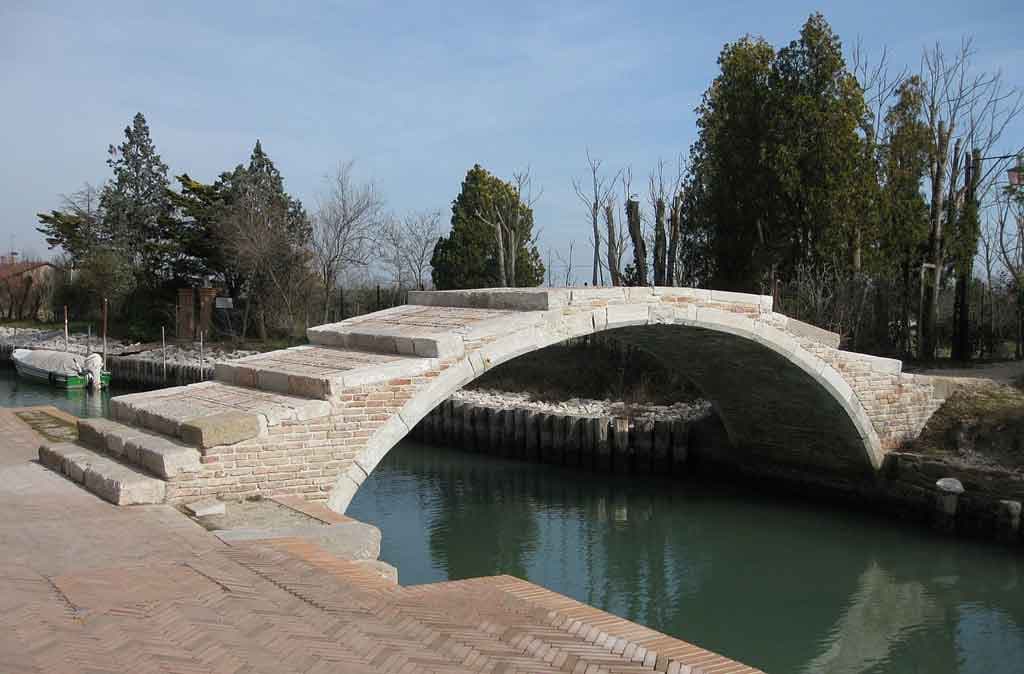
The Devil’s Bridge, Ponte del Diavolo, has no parapets. Local legends attribute its construction to the devil in a single night; enjoy the story as folklore and take care near the unguarded edges. For a longer walk and the island’s archaeological setting, see our Torcello itinerary.
Locanda Cipriani, historically associated with Ernest Hemingway, is an option for a separately planned garden meal when operating. Its own website, checked on 5 November 2026, says it is closed for winter and will reopen on 19 March 2027. Confirm availability before making it part of your day; do not rely on it for an unbooked afternoon snack.
Museum tickets, opening hours and closures
The following standard adult prices and hours were checked with MUVE and the Patriarchate of Venice on 5 November 2026. Concessions and special openings have separate conditions. Walking around the islands does not require a museum ticket; transport and attraction admissions are separate purchases.
| Attraction or ticket | Standard adult price | Hours and coverage |
|---|---|---|
| Murano Glass Museum | €15 | November–March: 10:00–17:00, last admission 16:00. April–October: 10:00–18:00, last admission 17:00. |
| Burano Lace Museum | €7 | 10:00–16:00, last admission 15:30; closed Mondays. |
| The Island Museums combined ticket | €20 | Glass Museum + Lace Museum + Torcello Museum; one visit each within three months. Does not include Torcello’s basilica or campanile. |
| Torcello basilica / campanile | €5 each; €9 combined | November–February: basilica 10:00–17:00, last entry 16:30; tower 10:00–16:45, last entry 16:00. |
From March to October, Torcello’s basilica opens 10:30–18:00, last entry 17:30; the tower opens 10:30–17:30, last entry 17:00. Both close on 25 December and 1 January. Cover shoulders and knees and follow visitor restrictions in places of worship.
Compare the combined museum ticket with the places you will actually enter. It covers the Torcello Museum, not the cathedral, and does not promise skip-the-line access to every attraction. Check MUVE ticket conditions and booking and the official Torcello hours and tickets before travelling. If you plan to add the Torcello Museum, verify its own opening day and leave extra time.
ACTV passes, organised tours and practical essentials
A 24-hour Venezia Daily Pass costs €25; standard 48-hour and 72-hour ACTV tickets cost €35 and €45. A standard 75-minute ticket costs €9.50, so compare your actual journeys: three separate single tickets cost €28.50. These fares were checked on 5 November 2026. The 24-hour period starts at first validation, and you must validate again when changing vehicles. These passes cover the ACTV island routes used here, with exclusions including Alilaguna and airport travel without the relevant supplement; they do not include private excursions or museum entry. Use our ACTV ticket and pass guide for full coverage and validation details.
Organised excursions remove the need to coordinate public-boat connections, but have fixed boarding points and time ashore. Check whether a guide accompanies you on land, which demonstrations are included, whether Torcello is a stop and whether admission tickets cost extra. Some depart near St Mark’s Square, others near the station; use the meeting point on your booking.
Compare Venice boat tours. For separate experiences in central Venice, browse gondola tours or walking tours. These do not replace transport between the lagoon islands.
Other tickets and experiences to compare
- Private Gondola Ride: Explore Venice with a Local Guide.
- Private Venice Tours with Gondola — Tailor-Made.
- Venice Casanova Quest: Self-Guided Romance Walking Game.
Read each product’s duration, inclusions and current availability before booking. These are separate Venice experiences, not a three-island boat ticket.
What to bring and when to go
- Comfortable shoes: expect paved lanes, bridges and uneven surfaces; allow more time if steps or long walks are difficult. Wheelchair users and visitors with limited mobility should check boat boarding, bridge routes and their chosen museums’ access with ACTV and MUVE before fixing the itinerary.
- Weather protection: bring layers or rain protection for lagoon wind; in warm weather carry sunscreen, a hat and a refillable water bottle.
- Payment options: carry a card and some small euro notes for minor purchases rather than assuming every business accepts the same payment methods.
- A realistic schedule: spring and autumn can offer comfortable walking conditions, but do not guarantee quiet streets. Early morning and late afternoon may suit photography; check opening hours and boats before choosing a later visit.
With only half a day, prioritise Murano and Burano and limit paid visits. A full day can add Torcello, but museums, demonstrations and lunch compete for that time. For detailed connections beyond this overview, use our Venice–Murano–Burano–Torcello route and timing guide.