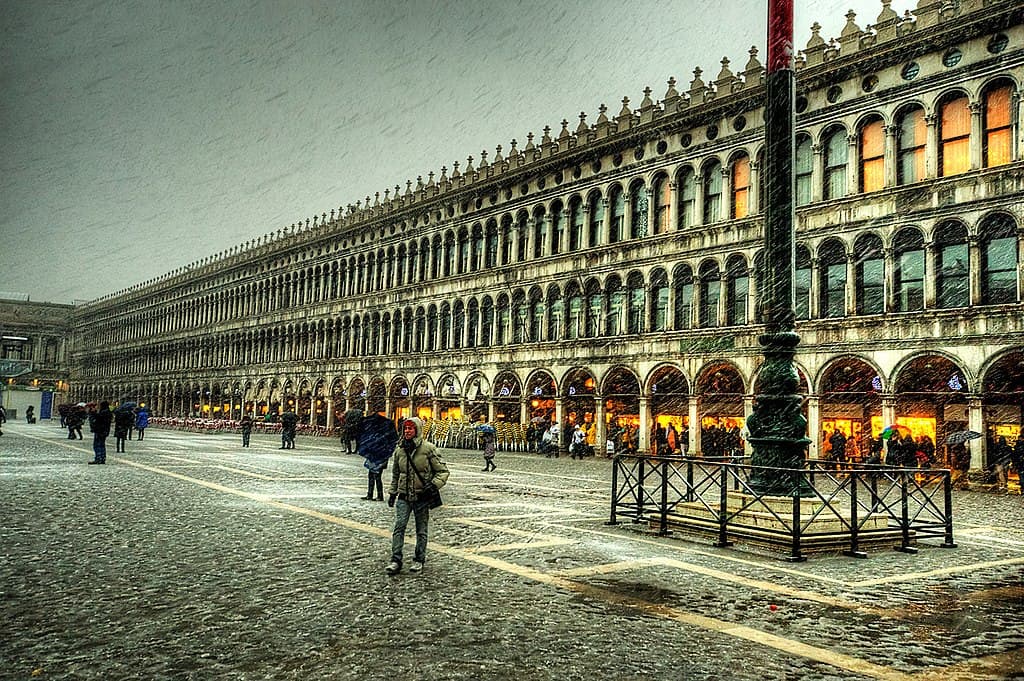
Venice and the weather throughout the year
Plan for Venice weather throughout the year with monthly temperatures and rainfall, seasonal packing advice, and practical tips for heat, fog and high water.
Venice weather throughout the year: what to expect
Venice has hot, humid summers, cold and often damp winters, and milder spring and autumn weather. For a walking holiday, May and September are good starting points; April and June can also work well. Rain is possible in every month, summer heat can exceed the averages below, and autumn or winter visits need a separate check of the tide forecast.
The city’s position beside the Adriatic and within the Venetian Lagoon helps explain its humid subtropical climate. Choose your month around the conditions you enjoy, then use a short-range forecast to pack for your actual travel dates.
Venice weather by month: temperature and rainfall
This table uses the World Meteorological Organization’s published 1971–2000 Venice climate averages, checked on 5 November 2026. The temperature pair is the average daily minimum and maximum, not a prediction or the coldest and hottest weather possible. The rainfall is an average monthly total. These historical figures are a consistent comparison between months; they do not describe current climate extremes.
| Month | Average low–high: °C (°F) | Rainfall: mm |
|---|---|---|
| January | −0.1–6.6 (31.8–43.9) | 47.0 |
| February | 0.8–8.6 (33.4–47.5) | 48.3 |
| March | 4.1–12.5 (39.4–54.5) | 48.8 |
| April | 7.8–16.1 (46.0–61.0) | 70.0 |
| May | 12.7–21.5 (54.9–70.7) | 66.0 |
| June | 16.1–24.9 (61.0–76.8) | 78.0 |
| July | 18.3–27.7 (64.9–81.9) | 63.9 |
| August | 17.7–27.5 (63.9–81.5) | 64.8 |
| September | 14.3–23.5 (57.7–74.3) | 72.0 |
| October | 9.6–18.0 (49.3–64.4) | 73.5 |
| November | 4.0–11.6 (39.2–52.9) | 65.5 |
| December | 0.6–7.4 (33.1–45.3) | 50.6 |
In this dataset, annual rainfall totals about 748 mm and June has the highest monthly total. Rainfall rankings differ between datasets and periods, so there is no reliably rain-free season. For daily planning, check ARPAV’s Veneto weather bulletin, including wind and thunderstorm information.
Winter in Venice: December, January and February
- December: expect cold evenings and short days. Christmas lights, seasonal markets and Venetian glass or handmade gifts give a reason to explore, but check the current event programme rather than assuming a market runs throughout December. Combine an outdoor walk past Rialto Bridge with a warm indoor stop.
- January: the coldest month in the historical table. Fog, frost and occasional snow are possible. Away from holidays and events, quieter canals and hearty Venetian food are part of the appeal; take breaks for Venetian hot chocolate in local cafés when the damp cold makes a long walk uncomfortable.
- February: still winter, despite slightly higher average temperatures. Venice Carnival can bring crowds, masks, costumes and busy accommodation. Look for programmed parades and balls, checking which events require a separate booking. Its dates move with the calendar, and celebrations can extend into January or March; do not assume a late-February start.
Allow for much shorter sightseeing days than in summer: around late December, sunrise is roughly 07:45–08:00 and sunset around 16:30, compared with about 05:30 and 21:00 in June. Times vary by date and the seasonal clock change. Save your main outdoor walk for daylight and keep museums or a café as alternatives when fog or rain affects the view. Winter gondola rides need warm clothing, and poor visibility can affect lagoon journeys.
Tip: plan winter around warm layers and flexible activities. A low-season date does not guarantee low prices or empty streets during Christmas, New Year or Carnival.
Spring in Venice: March, April and May
- March: a transition month with chilly mornings and evenings. Wear layers for walks through the city and visits to San Giorgio Maggiore; keep a waterproof layer handy.
- April: longer days and milder afternoons make walking more comfortable. The Frari basilica is an indoor option between showers. Easter and school holidays can be busy, so mild weather does not automatically mean fewer visitors.
- May: a useful balance of warmth and daylight for St Mark’s Square, photography, outdoor meals and lagoon trips. Rain still belongs in the plan. The Festa della Sensa celebrates Venice’s bond with the sea with a waterborne procession and traditional rowing; check the current programme before arranging a visit around it.
Spring gardens, outdoor markets on their operating days and longer evenings suit unhurried exploring, including walks beside the Grand Canal. Choose light layers, comfortable shoes and a jacket you can carry when the afternoon warms up.
Summer in Venice: June, July and August
- June: the longest daylight period allows early starts and late walks. Consider the Murano itinerary or Burano itinerary, with a check of boat services and the forecast before leaving. Warm weather does not rule out heavy showers or thunderstorms.
- July: the highest average daytime temperature in the table. Humidity can make walking feel harder, and a monthly average is not a ceiling during hot spells. Put exposed sightseeing early or late, with an indoor break in the hottest part of the day. July’s Redentore celebrations are associated with the Redentore Church; its traditions include fireworks over the lagoon and rowing regattas. Check the current programme, viewing access and transport arrangements.
- August: remains hot and humid, with warm sea conditions making the Lido beaches a possible part of the trip. Check beach facilities and local conditions. Bring sun protection for waterfronts and boats: a gondola ride does not guarantee shade.
Outdoor cafés, evening events and waterfront walks can make good use of summer’s long days. Drink regularly, carry a refillable bottle, and allow breaks rather than scheduling continuous walking. Browse Murano tours if you prefer an organised island visit.
Autumn in Venice: September, October and November
- September: often a comfortable compromise between summer warmth and cooler evenings. Outdoor sightseeing and evening walks remain appealing, but important events can keep accommodation and attractions busy. Pack a light layer and rain protection.
- October: cooler days and changing autumn light suit photography and neighbourhood walks. The tide forecast becomes especially useful when planning low-lying routes; a rain forecast alone does not tell you whether a pavement will flood.
- November: colder, shorter days bring a greater need for waterproof clothing and flexible plans. Fog and high water are possible, while quieter periods can suit museums, cafés and exploring less-visited streets.
The Venice Biennale is another reason to check the cultural calendar, but its art and architecture programmes have their own dates and are not autumn-only events. Look for seasonal Venetian food, including autumn mushroom dishes, without assuming a particular food festival will coincide with your stay.
Acqua alta, fog and rain: what changes your plans?
Check tides separately from the weather
Acqua alta is high water that can flood lower parts of Venice. It is more likely in autumn and winter, but is not confined to November–February. Astronomical tides combine with wind and atmospheric pressure; rainfall in the city is not the same thing as a high tide.
MOSE’s movable barriers help protect the lagoon, but do not replace checking local conditions. Heed official high-water alerts and local announcements. Consult the current tide forecast, note the expected peak time, use open raised walkways where provided, and choose a dry route. Ordinary waterproof shoes are for rain; they do not make walking through floodwater safe.
Allow time for fog and boat-service changes
Late-autumn and winter fog can create atmospheric canal views while reducing visibility. Before an island trip or airport connection, recheck vaporetto routes and notices at the stop. ACTV’s high-tide information explains service changes and identifies the city’s official tide centre. Water taxis and other boat operators also need to assess conditions; allow extra time and check with the operator.
Tip: keep one indoor activity near your planned route. Switching the order of a church visit and an outdoor walk is often more useful than committing to the same itinerary in every forecast.
What to pack for each season
- Every season: comfortable walking shoes with grip for stone paving and bridges, a compact umbrella or raincoat, a small backpack, and protection for valuables. Recheck the forecast shortly before departure.
- Winter: a warm coat over layers, sweaters or thermal clothing, gloves, scarf, hat and waterproof boots. A waterproof bag and spare socks are useful for wet days.
- Spring: short- and long-sleeved tops, a light jacket, a waterproof layer, sunglasses and sunscreen for brighter days.
- Summer: breathable cotton or linen, a sunhat, sunglasses, sunscreen and a refillable water bottle. A light cardigan or shawl can be useful for breezy evenings and indoor stops. Consider insect repellent for mosquitoes on warm evenings, following the product instructions.
- Autumn: adaptable layers, a sweater, a waterproof jacket and water-resistant shoes. Early September and late November need quite different clothing.
Carry a light cover-up for church visits, including St Mark’s Basilica, and check the venue’s current dress and admission rules. Weather-appropriate clothing does not replace those rules.
Planning sightseeing, tickets and seasonal events
Venice is a year-round destination, but attractions, transport, beach facilities and tours have their own seasonal schedules. Streets and squares do not share a single set of opening hours with museums or churches. Public raised walkways are free to use when open. Attraction tickets, transport fares and any city access requirements are separate. Check the hours, access arrangements and weather policy for each booking; do not assume a winter walk-in or year-round tour departure is available.
For broader trip ideas, use our Best of Venice and city guides, or explore the Venice City overview. Our weather and seasons section and Carnival guide can help you plan around your interests. A personal concierge can help coordinate arrangements if you need support.
For popular museums, historic attractions and theatre performances, book online in advance where available, especially at busy times; check timed entry and ticket availability rather than counting on a walk-in. For a guided visit, check the actual itinerary, indoor admissions, meeting point and cancellation terms. If you are interested in specialist water-management or architectural tours, confirm which sites the advertised itinerary actually includes. A glassworks demonstration is an indoor activity, but travelling to Murano or Burano still depends on suitable conditions. Recommended options include:
- Glass Blowing Show Visit Murano Glass Factory and Showroom OMG.
- Murano and Burano with Visit to the Glassworks and Lace Museum.
- Half Day Murano and Burano Island Tour by Private Boat.
Compare Venice tours and tickets, then choose a time and activity that fit the forecast. For more help choosing travel dates, see our weather-by-month and best-time-to-visit guide. May and September remain sensible options for a first walking trip; summer favours long evenings and beach days, while winter rewards visitors comfortable with cold, shorter days and a flexible itinerary.