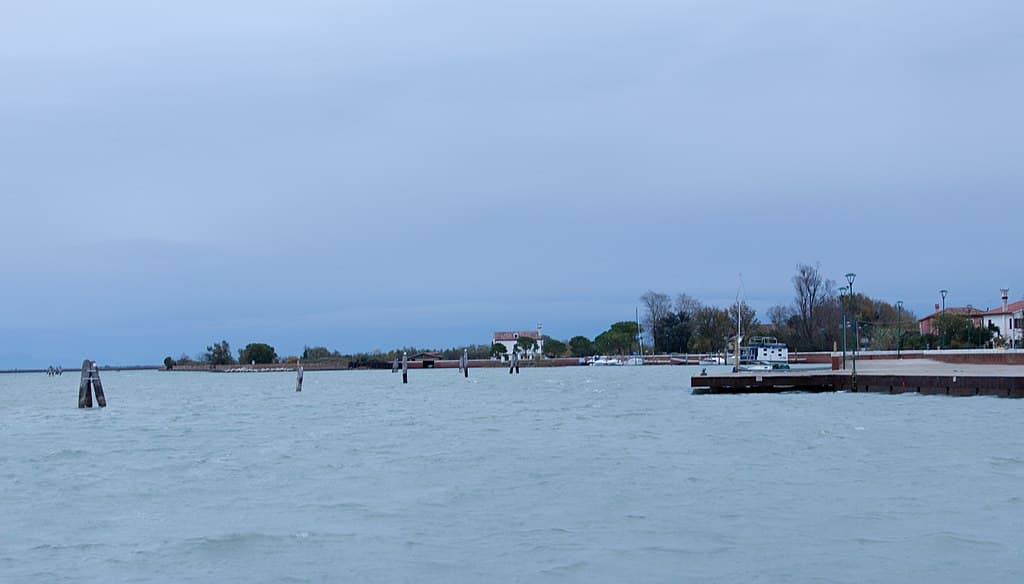
Discovering the gardens of the Lagoon
Plan a Venice lagoon garden day: Royal Gardens, Redentore convent garden, Sant’Erasmo, San Francesco del Deserto and Lazzaretto Nuovo, with hours and access.
Venice lagoon gardens: choose a route you can enjoy
To discover the Venice lagoon gardens, start in the city with the Royal Gardens near St Mark’s Square, the Redentore convent garden on Giudecca and the green spaces of Castello, or set aside a separate day for Sant’Erasmo, San Francesco del Deserto or Lazzaretto Nuovo. These are different outings: public parks, a ticketed monastery garden, working farmland and guided island visits each have their own access rules. Trying to fit them all into one day leaves little time for the gardens.
Use this comparison to choose your day. Time allowances in this guide are suggestions, not ferry journey times. Opening information and prices were checked on 9 November 2026; confirm your date before travelling.
| Garden or island | Access and admission | Best fit |
|---|---|---|
| Royal Gardens (Giardini Reali) | Free; Wednesday–Sunday, with seasonal hours and holiday closures | A short garden break near St Mark’s |
| Redentore convent garden, Giudecca | €12 ticket (€6 reduced); Thursday–Saturday, plus Wednesdays in May, June, September and October; closed January to 10 February | A monastic kitchen and herb garden |
| Castello public gardens and Sant’Elena | Public green spaces; the enclosed Biennale exhibition grounds have separate ticketing and opening dates | A relaxed half-day on foot |
| Sant’Erasmo | Explore public roads and paths; farms and vineyards are private | A countryside walking or cycling day |
| San Francesco del Deserto | Friar-led visit, about 40 minutes; no admission ticket, voluntary offering; separate boat transfer | A planned monastery visit via Burano |
| Lazzaretto Nuovo | Guided visits only, March–November; book ahead and expect a contribution | Quarantine history and a saltmarsh walk |
| Lido and Alberoni | Private villa gardens are generally not open; Alberoni offers a nature outing | A separate Lido walking or cycling day |
How gardens shaped lagoon life
Gardens here combine food growing, retreat and design. Monastic plots traditionally supplied herbs for food and medicine, vegetables and fruit, while private gardens and later public parks added ornamental planting and places to pause. Wealthy owners used Italian Renaissance gardens to display ordered walks, clipped evergreen planting, fountains and rare plants; these design traditions developed into the grander Baroque style. Trade brought new plants into European gardens. Venice’s own Royal Gardens reflect a later chapter, with a formal layout and plants from beyond the lagoon. Sant’Erasmo’s working fields, the Royal Gardens’ formal layout and the convent gardens of the Redentore and San Francesco del Deserto show different relationships between green space and a city short of land. Treat them as living places, with different owners and purposes.
A simple garden itinerary in central Venice
- Start at the Royal Gardens. Allow roughly 30–45 minutes to enjoy the planting and pergola beside St Mark’s Square, near the mouth of the Grand Canal. This is a convenient introduction to garden visiting in Venice.
- Continue east into Castello. Follow the waterfront towards the Giardini, leaving time for bridges, photographs and a break. The public green spaces suit an unhurried walk; enter the Biennale’s enclosed exhibition area only if you have planned and ticketed that visit.
- Finish at Sant’Elena. Continue to the pine-shaded Parco delle Rimembranze for benches and lagoon views, then walk back or take a vaporetto from a suitable nearby stop. Check the return route before setting off.
Tip: choose Wednesday to Sunday if the Royal Gardens are essential to your route. On Monday or Tuesday, focus on the public spaces of Castello and Sant’Elena instead.
Royal Gardens: hours and booking
The Royal Gardens are free to enter. From 16 October to 14 April they open Wednesday–Sunday, 09:00–17:00; from 15 April to 15 October, Wednesday–Sunday, 09:30–19:00. They close on Mondays and Tuesdays, 25 and 31 December, 1 January, the last Saturday and Sunday of Carnival, Easter Sunday and the Saturday of the Festa del Redentore (the third Saturday in July). Groups of more than ten must book by email; check the Foundation’s visitor information for bookings and exceptional closures.
The gardens grew out of Napoleon’s early nineteenth-century reorganisation of the San Marco area. Venice Gardens Foundation restored them between 2015 and 2019, and they reopened on 17 December 2019. The work restored the 90-metre cast-iron pergola, the small drawbridge, the 1816 main gate and Lorenzo Santi’s neoclassical pavilion, and reinstated the greenhouse. Wisteria climbs over the pergola, with evergreen planting, hydrangeas and other shrubs balancing the formal design; Paolo Pejrone’s botanical restoration combined the garden’s geometry with a more exuberant planting scheme. Do not picnic, drink alcohol or walk in the flower beds here.
Giardini della Biennale and Sant’Elena
The Napoleonic gardens in Castello, one of Venice’s sestieri, connect garden history with art and architecture. Distinguish the public park from the ticketed grounds and national pavilions of the Venice Biennale. A free stroll in the neighbourhood does not include exhibition admission or guarantee access inside its gates outside the exhibition season. Our Biennale Gardens guide covers the venue in more detail.
Parco delle Rimembranze is a memorial park remembering the war dead, on Sant’Elena at the eastern end of Venice. Its tall trees, shaded benches and waterfront make it a natural extension of the Castello walk. For other city gardens, use our hidden gardens of Venice guide.
Giudecca: the Redentore convent garden
Behind Palladio’s Redentore church on Giudecca, the Capuchin friars’ convent garden opened to the public for the first time on 26 October 2024, after Venice Gardens Foundation restored it with landscape architect Paolo Pejrone. Cross-shaped paths under pergolas of vines and climbing roses divide plots of vegetables, with fruit trees and a large olive grove beyond; a smaller olive grove greets visitors at the entrance. Lavender, sage and helichrysum edge the walkways, and medicinal plants such as mallow, chamomile and valerian grow among the vegetables as a reminder of the friars’ old garden of simples. A water basin with lotus flowers and water lilies marks the centre.
Tickets cost €12, or €6 for residents, children aged 6–12 and FAI members; children up to five enter free. Buy on site or online, with a booking fee. The garden opens at 10:00 from Thursday to Saturday, and from Wednesday to Saturday in May, June, September and October. It closes at 16:30 in February, November and December, at 17:30 in March and April, and no earlier than 18:00 from May to October; last entry is 30 minutes before closing. It closes in January, from 1 to 10 February, on Ash Wednesday, in Holy Week, on 4 October and on 24, 25, 26 and 31 December. Groups of more than ten must book by email. The church is a separate visit; take a vaporetto to the Redentore stop.
Tip: plan a Thursday, Friday or Saturday if you want both the Royal Gardens and the Redentore garden, and check the Redentore garden’s winter and holiday closures first.
Sant’Erasmo: the working garden of Venice
Sant’Erasmo’s fields, orchards, vineyards and small farmhouses show how growing food remains part of lagoon life. It is a large agricultural island, with a quieter landscape than the classic Murano and Burano sightseeing routes. Its flat agricultural landscape has supplied Venice with vegetables, fruit and wine since the Middle Ages. Slow Food describes the soil as clayey, well drained and salty, conditions associated with its distinctive vegetables. Its best-known crop is the violet artichoke: the tender first buds, called castraure, are a spring speciality. Grapes, lettuce, asparagus, figs and other seasonal vegetables from the islands connect these fields with Venetian markets and cooking.
Plan a half-day or longer for a walk or cycle ride along public roads, with views of fields and lagoon channels. Take ACTV line 13 from Fondamente Nove and choose the Sant’Erasmo stop that suits your route, rather than assuming all landings are interchangeable. Our vaporetto lines guide explains how the network works; check line 13’s outward and return sailings in the current ACTV timetable.
- Bring water, sun protection and comfortable shoes; this is a rural outing rather than a continuous line of visitor facilities.
- Arrange bicycle hire in advance if cycling is essential. Carrying a bicycle on a boat depends on the route, space, captain’s permission and any applicable charge.
- Ask a farm or vineyard directly about tastings, meals or seasonal activities. Harvest participation and entry to cultivated land are not included in a public island walk.
- Stay on public paths, leave crops untouched and take litter away.
Tip: pair the walk with seasonal food bought from an open farm outlet or a meal you have confirmed in advance. Leave time to return to your chosen landing before the boat arrives.
San Francesco del Deserto: a monastery garden by boat
Between Burano and Sant’Erasmo, San Francesco del Deserto offers a quieter encounter with the lagoon’s religious heritage. It is a living Franciscan community, not a park for unrestricted wandering. Rows of old cypresses and pines line the shore of the small island, and the guided visit includes the cloister, church and part of the garden-park in their shade, with time to appreciate the monastery’s setting and contemplative life. The friars’ kitchen garden and vineyard are not part of the visit. Ask the community directly about any herbal products rather than expecting a shop during the visit.
The friars’ published departures are 09:00, 09:45, 10:30, 15:00, 15:45 and 16:30, every day except Monday and any additional closure decided by the community. The visit lasts about 40 minutes. There is no admission ticket; a voluntary offering supports the island. Groups must book, and the friars do not accept group reservations more than two months ahead.
There is no public ACTV connection for the final crossing from Burano. Arrange a private boat, water taxi or the Burano shuttle separately, including the return pickup, and match it to a confirmed departure. For the shuttle, the friars refer visitors to Laguna Fla Group (Massimiliano, +39 347 9922959); book it ahead. A vaporetto pass does not cover this private crossing.
- Arrive punctually and allow a margin between your Burano arrival and private transfer.
- Dress modestly, speak quietly and ask before photographing religious spaces.
- Confirm steps, landing arrangements and walking surfaces directly if you need assistance.
Lazzaretto Nuovo and Lazzaretto Vecchio
The two former quarantine islands connect Venice’s maritime and public-health history with lagoon nature. They are separate destinations with different access arrangements, rather than two gardens to add casually to the same boat trip.
Lazzaretto Nuovo: book the guided visit first
Visits are guided only, from March to November, and last about two hours. They combine the historical and archaeological route inside the walls, with the museum in the Tezon Grande and the open-air excavations, and the saltmarsh walk outside them, the Sentiero delle Barene. The Venetian Senate decreed a lazzaretto on the island in 1468. The Tezon Grande, built in the second half of the sixteenth century to store and disinfect cargo, is more than 100 metres long; the island’s managers describe it as the largest historic building in the lagoon after the Corderie of the Arsenale. Merchants, guards and porters left inscriptions and drawings on its walls, and Venice in Peril dates those it helped conserve to 1580–1660. Goods were fumigated with the smoke of aromatic herbs such as juniper and rosemary.
Inside the walls, the museum route crosses a large garden of mulberries, planted along radial avenues in the nineteenth century when the island was an Austrian military depot, with small groves of ash, poplar and wild plum. Outside, the saltmarsh path passes salt-tolerant plants such as glasswort, sea lavender and sea aster, with herons, egrets and other birdlife. Bring binoculars and follow the guide’s route.
In 2026 the organisers scheduled English-language visits on Saturdays at 11:00 from 4 April to 24 October, with exclusive tours only in August. The contribution was €10, or €5 for children up to 14, paid by card on arrival. Book by email by the preceding Thursday and wait for confirmation, because each visit needs a minimum number of participants; exclusive visits on other days start at €150. Use the official visit and booking information for the current season.
Line 13 stops at Lazzaretto Nuovo only on request. For the Saturday visit the organisers quote a 10:25 boat out and a 12:55 boat back; check both in the current line 13 timetable and confirm landing and reboarding with the organisers rather than treating it as an ordinary stop.
Lazzaretto Vecchio: special openings only
Lazzaretto Vecchio lies beside the western shore of the Lido. Its former hospital buildings tell another part of Venice’s response to epidemics. Visits depend on announced extraordinary openings; do not assume there is a daily ferry, standard garden admission or a walk-in tour. Check for a confirmed opening before adding it to a Lido day, and otherwise choose the accessible public landscapes on your route.
Lido gardens and the Alberoni dunes
The Lido offers more than beaches and the Venice Film Festival. Belle Époque villas and early twentieth-century houses have private gardens that can be appreciated from public streets; enter only with permission or a specific booked opening. Use our Lido bike itinerary to plan the wider island route.
The Alberoni dunes are at the southern end of the Lido, roughly 9 km from the central Santa Maria Elisabetta landing. This is a coastal nature reserve with dune plants, orchids, pine woodland and birdlife, rather than a formal garden. WWF describes free independent access throughout the year and guided visits by arrangement. Take an ACTV boat to Lido Santa Maria Elisabetta, then check the bus connection towards Alberoni or plan a suitable cycle route. Confirm transport for both directions.
Stay on permitted routes, respect nesting areas and signs, and do not cycle across protected dunes. Spring into early summer and autumn are particularly rewarding for flowers and wildlife. Binoculars and a sketchbook are useful companions; leave plants and flowers where they grow. If plants used in traditional medicine interest you, ask your guide about their history and identification; avoid picking or self-medicating with unfamiliar herbs.
Tickets, season and practical planning
Budget for transport separately from garden entry
ACTV visitor tickets can be useful when your plans include several boat journeys. The standard prices below were checked on 9 November 2026; our ACTV pass guide explains coverage and alternatives.
| ACTV visitor ticket | Price checked 9 November 2026 |
|---|---|
| 24 hours (Venezia Daily Pass) | €25 |
| 48 hours | €35 |
| 72 hours | €45 |
Validity runs from first validation; validate as required when boarding. These tickets do not include private island transfers, water taxis, Alilaguna services or garden/exhibition admission. Airport connections have separate conditions. For a concrete private-hire budget, Colibrì Boat Tour publishes a charter from €150 per hour for the whole boat with skipper, up to six guests and a three-hour minimum (€450 minimum), checked 9 November 2026. This is one operator’s example, not a lagoon-wide starting fare; confirm permission and landing arrangements for any garden stop. Ask for a specific quote covering the route, waiting time, return, passenger numbers and accessibility. Buy a combined heritage or museum ticket only after checking that it actually includes the garden you want.
When to go and what to bring
April–June and September–October are useful planning choices for milder conditions, spring growth and autumn colour. Opening calendars still decide what is possible: some public gardens open through winter, while private properties, guided islands and exhibitions follow their own schedules. A Monday or Tuesday trip needs particular care: the Royal Gardens close on both days, the Redentore garden from Sunday to Tuesday, and San Francesco on Monday.
- Wear shoes suited to gravel, grass and uneven historic surfaces. Shade and benches in a public park do not establish step-free access to an island.
- Confirm the complete route from boat landing to garden with the venue if you use a wheelchair or have limited mobility.
- Carry water, weather protection, a charged phone and the return timetable. Allow for wind, tides and service changes.
- Ask about English-language guiding when booking; availability varies by venue and departure.
- Respect silence at the monastery, private property on farming islands and nature-protection rules everywhere.
Optional tours and tickets
For a separate sightseeing outing, browse Venice boat tours, Venice tours and activities or gondola tours. Standard sightseeing excursions do not automatically land at monastery gardens or quarantine islands: confirm the actual stops before booking.
- Venice Sunset by Typical Venetian Boat with Prosecco
- Private Walking Tour of Venice’s Old Town with Gondola Ride
- Murano Glass Experience With a Visit to Burano Lace Island
Choose one garden route that fits your time and confirmed access. The lagoon’s public parks, cultivated fields, monastic spaces and coastal habitats reveal complementary sides of Venice. Our lagoon islands excursion guide can help with a separate island-focused day, and our guide to alternative lagoon islands covers quieter stops such as Vignole and Sant’Erasmo.